

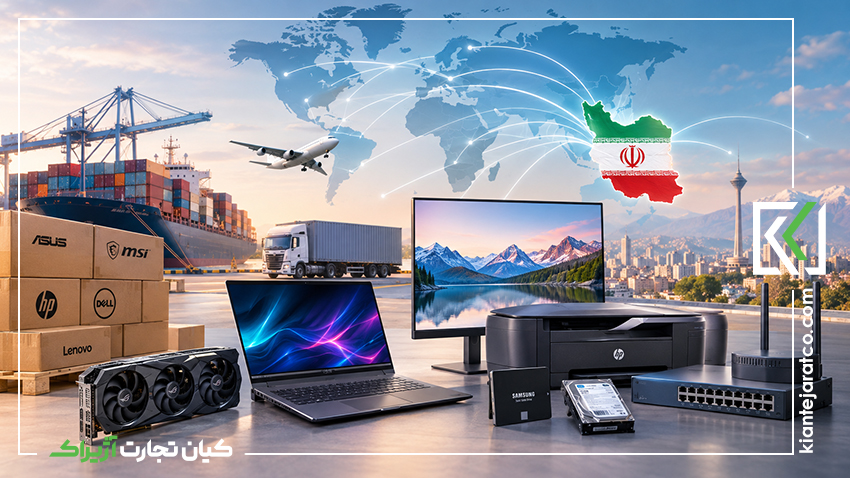
Today, Supply of information technology equipment is no longer limited to purchasing a laptop, monitor, or printer. Companies, organizations, and professional users need equipment that is not only technically reliable, but also trustworthy in terms of authenticity, availability, after-sales service, and supply chain stability.
In Iran, this issue has become even more important. The gap between the global technology market and the domestic market, trade restrictions, economic fluctuations, import complexities, and limited direct access to certain international brands have turned Supply of IT equipment into a specialized challenge.
Under these circumstances, choosing the right supplier is not simply an economic decision. It can directly affect productivity, organizational costs, and even business continuity.
Why Is IT Equipment Supply Important in Iran?
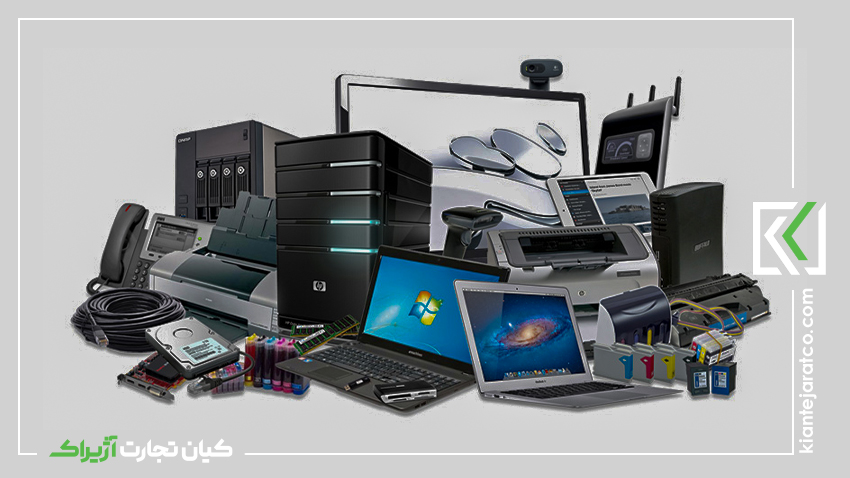
Technology is evolving at a rapid pace. New generations of processors, graphics cards, SSDs, monitors, laptops, and networking equipment are constantly being introduced to the global market.
However, the global launch of a new product does not necessarily mean that Iranian customers will gain quick access to it.
This is where effective Supply becomes essential. A reliable supply chain should be capable of sourcing products through legitimate and traceable channels, managing transportation and storage conditions, and ultimately delivering products with accurate information and dependable service.
According to data from the World Bank’s World Integrated Trade Solution (WITS), Iran has a significant import dependency in certain categories related to electronic components and integrated circuits. For example, Iran imported approximately $199.25 million worth of electronic integrated circuits and microassemblies in 2022. China, Hong Kong, the United Arab Emirates, and Turkey were among the major sources for this product group.
This highlights an important point: Supply of technology equipment and components in Iran is part of a much broader international chain, and disruptions anywhere along that chain can influence the domestic market.
The Main Challenges of IT Equipment Supply in Iran
Price Fluctuations and Import Costs
One of the most important challenges in Supply of IT equipment is the changing final cost of products.
Domestic prices are not determined solely by global product prices. Transportation expenses, currency exchange rates, import costs, payment conditions, and market inventory can all affect the final price.
As a result, the international price of a product may remain relatively stable while its price in the Iranian market changes significantly over a short period.
For companies and organizations making bulk purchases, these fluctuations become even more important. Even a relatively small price difference across multiple units can have a noticeable impact on the final procurement budget.
Dependence on Intermediary Routes
When direct access to manufacturers or primary distributors becomes difficult, the Supply chain usually becomes longer.
Every additional intermediary can potentially increase costs, complicate logistics, and make product authenticity more difficult to verify.
There is another side to this issue. An intermediary with a professional Supply network can provide access to products that may otherwise be difficult for the end customer to obtain directly.
The Role of Imports and Supply Chains in Technology Access
The technology market is highly dependent on global supply chains. The production of a laptop, monitor, or computer component often involves multiple countries and several different companies.
Therefore, Supply is not simply about importing a finished product. It also involves access to components, transportation, warehousing, inventory management, and distribution networks.
WITS data shows that China, Hong Kong, the United Arab Emirates, and Turkey were among the important trade partners associated with Iranian imports in certain electronic product categories. In 2022, China and Hong Kong together accounted for a substantial share of Iran’s imports of electronic integrated circuits and microassemblies.
More specifically, Iran’s 2022 imports of digital monolithic integrated circuits were valued at approximately $147.83 million, with Hong Kong, China, and mainland China among the largest sources, followed by Turkey and the United Arab Emirates.
As a result, a company active in IT equipment Supply should not focus solely on purchasing products. Effective management of the wider supply chain is equally important.
Product Authenticity: A Key Part of Reliable Supply
A lower price does not always mean a better purchase.
One of the significant risks in the IT equipment market is the difficulty of distinguishing genuine products from unreliable, refurbished, or products with an unclear history.
For products such as SSDs, hard drives, graphics cards, laptops, and monitors, careful verification of the exact model, serial number, packaging, technical specifications, and warranty conditions is essential.
Professional Supply should therefore be supported by effective authenticity controls.
Customers should clearly understand what product they are purchasing, what specifications it has, and what support path is available if a problem occurs.
For more information about digital products and equipment purchasing solutions, visit Digital Shop.
What Role Does After-Sales Service Play?
IT equipment is different from many ordinary consumer products because it often forms an important part of a customer’s working infrastructure.
A defective monitor may simply be inconvenient for an individual user. However, the failure of an organizational printer, storage device, or work system can interrupt a significant part of business operations.
For this reason, reliable Supply does not end when the product is delivered.
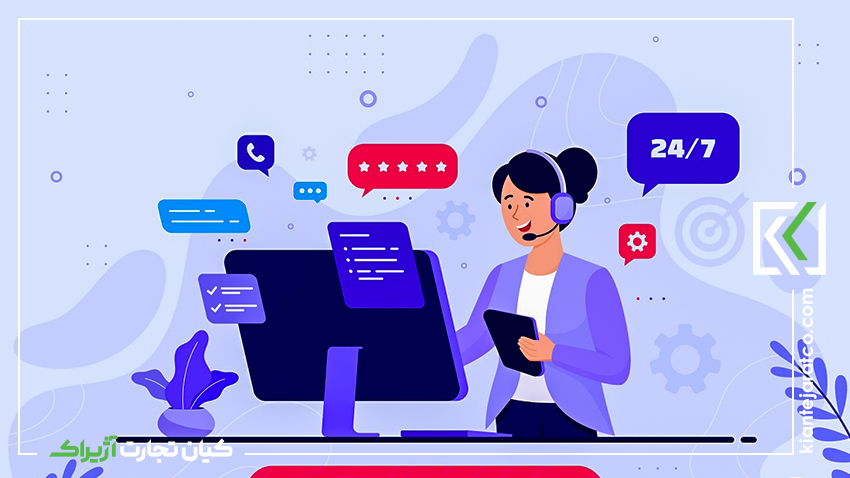
Warranty coverage, technical support, fault tracking, access to replacement components, and repair services are all important parts of a complete supply chain.
A professional after-sales service network can therefore reduce the risks associated with purchasing IT equipment and provide customers with greater confidence throughout the product lifecycle.
How Should You Choose the Right IT Equipment Supplier?
Choosing a company for IT equipment Supply should be based on several criteria rather than price alone.
Experience and Reputation
A company with years of experience in the technology market usually has a better understanding of brands, import routes, common product issues, and changing market conditions.
Experience can also make it easier to identify realistic pricing, availability, and product specifications.
Transparent Product Information
The exact model, technical specifications, product condition, warranty terms, and delivery conditions should be clearly defined before purchase.
Transparency reduces misunderstandings and allows customers to make more informed purchasing decisions.
Consistent Supply Capacity
For organizational projects, having a product available at a single point in time may not be enough.
The supplier should be capable of sourcing additional units when required and maintaining reasonable consistency in product specifications and availability.
After-Sales Support
A valid warranty and responsive technical support can make a significant difference between a low-cost purchase and a genuinely cost-effective one.
For organizations, support after delivery can be particularly important because equipment failures may result in additional operational costs.
Product Variety
A company that can provide laptops, monitors, computer components, networking equipment, printers, and other IT products through a single Supply network can simplify procurement and reduce the complexity of managing multiple suppliers.
More information about the company’s activities and technology portfolio is available on the Kian Tejarat Azhirak website.
How Is Supply for Businesses Different from Ordinary Purchasing?
In a personal purchase, users may focus primarily on price and product specifications.
For organizational procurement, however, Supply should be based on the actual operational requirements of the business.
For example, a company may need several dozen laptops. In such a situation, simply selecting a model is not enough.
Inventory stability, consistency between devices, warranty conditions, delivery schedules, technical support, and the ability to obtain additional units can all become important factors.
That is why organizational Supply is closer to procurement and supply-chain management than to a simple transaction.
This approach can also help reduce hidden costs related to equipment failure, incompatibility, inconsistent specifications, and operational downtime.
The Future of IT Equipment Supply in Iran
Technology is evolving rapidly, and demand for newer equipment is increasing alongside these developments.
The expansion of artificial intelligence, intensive graphics processing, cloud computing, data centers, high-speed networking, and remote work has increased the need for updated infrastructure and more capable hardware among companies and organizations.
As a result, Supply of IT equipment is gradually moving beyond a simple buying-and-selling process and becoming an important part of technology planning.
Access to a diverse product portfolio, understanding the customer’s actual requirements, inventory management, and reliable after-sales services all contribute to building an effective supply chain.
In the future, companies capable of following global technology developments while providing product variety, quality, authenticity, and dependable support will play an increasingly important role in the IT equipment Supply market.
The future of this market will therefore depend not only on the number of available products, but also on the ability of companies to select, source, and deliver technology intelligently according to customer requirements.
Conclusion
The Iranian technology market depends on global products, but connecting the domestic market to the latest international technologies is not always straightforward.
IT equipment Supply in Iran is influenced by several factors, including currency fluctuations, trade restrictions, import routes, inventory availability, product authenticity, and after-sales services.
For this reason, selecting a supplier should go beyond comparing prices.
A company capable of providing product authenticity, stable availability, product variety, technical guidance, and dependable after-sales service can create significantly greater value for its customers.
Ultimately, the key question is not simply, “What product should we buy?”
The more important question is:
Through which channel should the product be sourced, with what level of confidence, and with what support behind it?
For businesses and organizations operating in a technology-dependent environment, reliable Supply is becoming an essential part of maintaining efficiency, reducing procurement risks, and ensuring access to the equipment required for continued growth.
